Stories
Folk tales from India with their 1892 pictures, and Grimms’ fairy tales — complete and free.
Tales from India
From Indian Fairy Tales, selected and edited by Joseph Jacobs, illustrated by John D. Batten (London: David Nutt, 1892). Public domain.
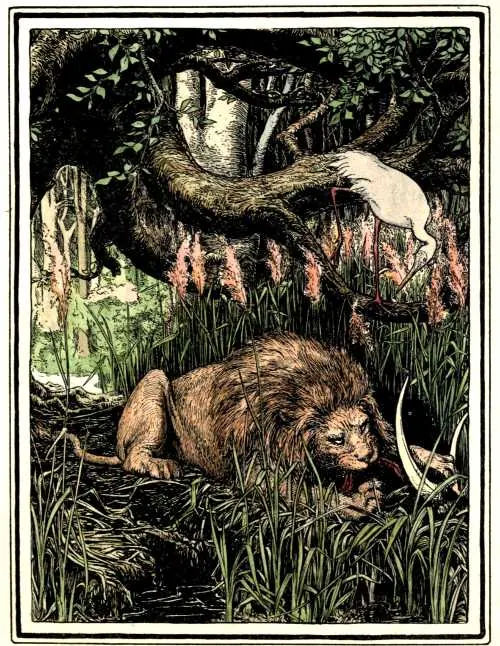 The Lion and the Crane3 minutes
 The Lambikin4 minutes
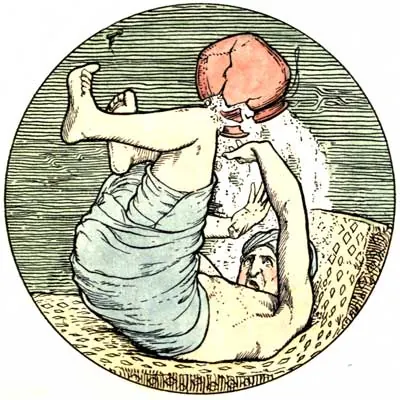 The Broken Pot2 minutes
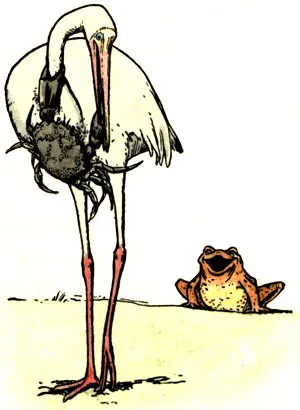 The Cruel Crane Outwitted6 minutes
- The Tiger, the Brahman, and the Jackal5 minutes
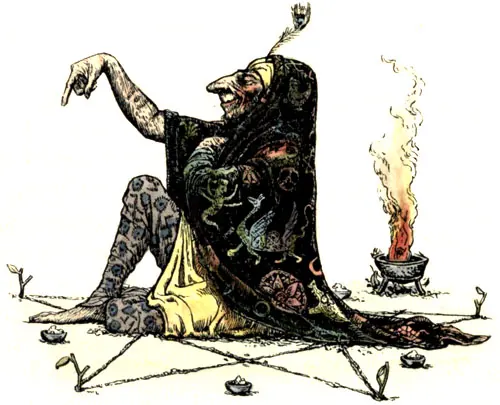 Harisarman7 minutes
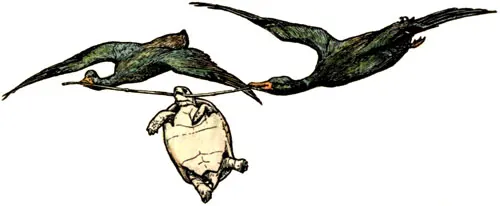 The Talkative Tortoise4 minutes
- A Lac of Rupees for a Bit of Advice14 minutes
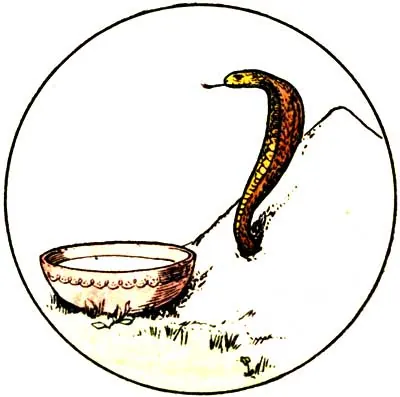 The Gold-giving Serpent3 minutes
- A Lesson for Kings6 minutes
 Pride goeth before a Fall4 minutes
- The Ass in the Lion's Skin2 minutes
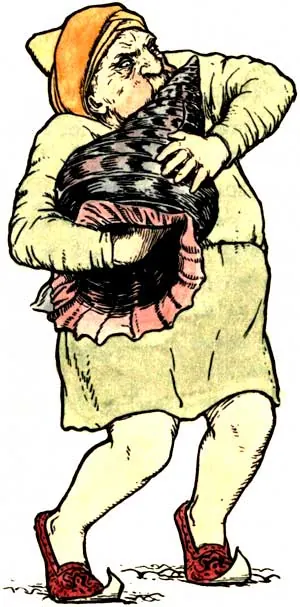 The Farmer and the Money-lender5 minutes
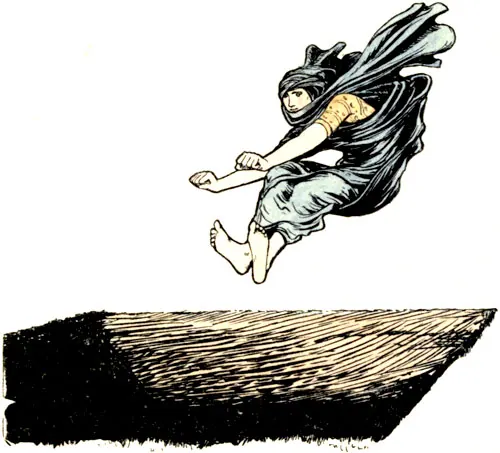 Why the Fish Laughed12 minutes
- How Sun, Moon, and Wind went out to Dinner3 minutes
 How the Wicked Sons were Duped2 minutes
- The Pigeon and the Crow4 minutes
Grimms’ fairy tales
From the Brothers Grimm’s Household Tales (Kinder- und Hausmärchen, 1812–1857), in the English translation of Edgar Taylor and Marian Edwardes. Public domain.
- The Elves and the Shoemaker5 minutes
- The Frog-Prince7 minutes
- Hansel and Gretel17 minutes
- Rumpelstiltskin7 minutes
- The Golden Goose9 minutes
- The Travelling Musicians8 minutes
- Briar Rose9 minutes
- The Twelve Dancing Princesses9 minutes
- The Fisherman and his Wife12 minutes
- Hans in Luck14 minutes
- The Straw, the Coal, and the Bean3 minutes
- The Wolf and the Seven Little Kids7 minutes
- Little Red-Cap8 minutes
- Snowdrop14 minutes
- Ashputtel15 minutes
- The Queen Bee5 minutes
- The Old Man and his Grandson2 minutes
Worked out on your device — nothing is sent.
About this page
What it shows
Classic stories to read on any screen: folk tales from India — Jataka birth-stories of the Buddha, fables from the Panchatantra and tales told in Kashmir, the Deccan and the Punjab — and the best-known fairy tales of the Brothers Grimm. Each is the complete printed text of a public-domain edition, with a reading time, a larger-text switch and the editor’s own note on where it came from.
Where these stories come from
The Indian tales are from Indian Fairy Tales, selected and edited by the folklorist Joseph Jacobs and published in London by David Nutt in 1892, with pictures by John D. Batten. Jacobs gathered them from the Jatakas, the Panchatantra, the Katha-Sarit-Sagara of Somadeva, and from collectors of his day such as Flora Annie Steel, Richard Temple, Mary Frere and J. Hinton Knowles. His note on each story’s source is printed beneath it.
The Grimm tales are the English translation of the Brothers Grimm’s Household Tales by Edgar Taylor and Marian Edwardes — the version that first made these stories known in English.
Why nothing has been rewritten
These are the texts as printed: nothing is shortened, modernised, retold or written by us. That keeps them honest to their sources, and it means some words and attitudes are those of the 1800s. The Indian tales keep the spellings of their time, such as Brahman and Raja.
Every book used here is in the public domain in India and elsewhere — their authors, translators and illustrator died long ago — so they can be read, printed and shared freely.
Reading with children
These are folk tales, not modern picture books: a wolf may eat a lamb and a trickster may be punished. Each page shows how long it takes to read, so you can choose a short fable for bedtime and save a longer tale for another day. “Larger text” makes any story easier to read on a phone held at arm’s length or read aloud together.
Questions
Are these the full stories?
Yes — each is the complete text of the story as printed in its edition, with only the line breaks changed.
Do I need an internet connection?
No request is made to read a story; they are part of the site. Once the site has been opened, pages you have visited stay available if your connection drops.
Can I print or share a story?
Yes. The texts and Batten’s pictures are in the public domain. Use the page’s address to share it.
Will there be stories in Hindi?
Only when there is a Hindi text we have the right to publish. We will not machine-translate a story and present it as the original.